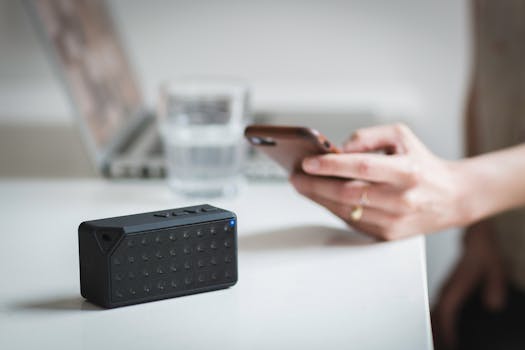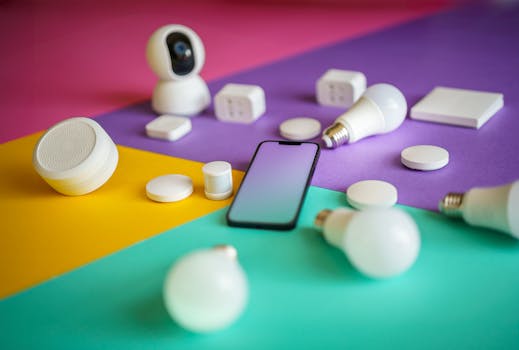
Bluetooth technology has become so ingrained in our daily lives that it’s easy to forget how far it has come since its inception. From wireless headphones and smartwatches to medical devices and home automation systems, Bluetooth connects billions of devices across the globe. Its journey from a simple cable replacement to a foundational pillar of the Internet of Things (IoT) is marked by constant innovation and adaptation. But how exactly has Bluetooth evolved over the years, and what does the future hold for this ubiquitous technology? Let’s investigate the progress of Bluetooth, exploring its history, advancements, comparative strengths, and ongoing impact.
The Origins and Evolution of Bluetooth
Bluetooth technology was first conceptualized in 1989 by Dr. Jaap Haartsen at Ericsson in Sweden. The name “Bluetooth” is a nod to King Harald “Bluetooth” Gormsson, a 10th-century Danish king known for uniting Denmark and Norway—much like how the technology unites communication protocols. Officially launched in 1999, Bluetooth 1.0 offered data transfer speeds of just 721 kbps and a range of about 10 meters (33 feet).
The early 2000s saw rapid adoption of Bluetooth in mobile phones, headsets, and laptops. As demand for wireless connectivity grew, so did the need for improved speed, range, and security. Each new version of Bluetooth brought significant enhancements:
.png) - $1 Enhanced Data Rate (EDR) increased speeds up to 3 Mbps.
- $1 Introduced High Speed (HS) with theoretical speeds up to 24 Mbps using Wi-Fi radio.
- $1 Introduced Bluetooth Low Energy (BLE), enabling energy-efficient connections ideal for wearables and IoT devices.
- $1 Doubled data rate to 2 Mbps, quadrupled range to 240 meters (in open space), and increased broadcast messaging capacity.
- $1 Enhanced Data Rate (EDR) increased speeds up to 3 Mbps.
- $1 Introduced High Speed (HS) with theoretical speeds up to 24 Mbps using Wi-Fi radio.
- $1 Introduced Bluetooth Low Energy (BLE), enabling energy-efficient connections ideal for wearables and IoT devices.
- $1 Doubled data rate to 2 Mbps, quadrupled range to 240 meters (in open space), and increased broadcast messaging capacity.
By 2024, Bluetooth Special Interest Group (SIG) reported that over 5 billion Bluetooth devices ship annually, highlighting its massive global adoption.
Key Technological Advancements Over Time
Bluetooth’s progress has been defined by several technological breakthroughs, each addressing specific needs in the wireless communication landscape.
1. $1 Early Bluetooth versions were limited by slow data transfer and short range. With the introduction of Bluetooth 5.0 and 5.1, data rates reached 2 Mbps, and outdoor range expanded up to 240 meters. These improvements enabled more robust connections for applications like smart homes and industrial automation. 2. $1 Launched with Bluetooth 4.0, BLE revolutionized short-range wireless by slashing power consumption without sacrificing performance. BLE’s efficient protocol allowed coin-cell batteries in devices like fitness trackers and medical sensors to last months or even years. 3. $1 Bluetooth security has evolved in response to emerging threats. Modern Bluetooth versions employ AES-CCM encryption, Secure Simple Pairing (SSP), and advanced authentication methods to protect against eavesdropping and unauthorized access. 4. $1 Bluetooth 5.1 introduced Angle of Arrival (AoA) and Angle of Departure (AoD) features, enabling centimeter-level indoor location tracking. This breakthrough is particularly valuable in retail, asset tracking, and navigation within large buildings.Bluetooth vs. Other Wireless Technologies: A Comparative Overview
Bluetooth is often compared with other short-range wireless technologies like Wi-Fi, Zigbee, and NFC. Each has its own strengths and ideal use cases. The table below highlights key differences:
| Feature | Bluetooth 5.0 | Wi-Fi 6 | Zigbee | NFC |
|---|---|---|---|---|
| Max Data Rate | 2 Mbps | 9.6 Gbps | 250 Kbps | 424 Kbps |
| Typical Range | Up to 240 m (open) | Up to 100 m | 10-100 m | < 0.1 m |
| Power Consumption | Very Low (BLE) | High | Low | Very Low |
| Primary Use Cases | Audio, IoT, wearables | Internet, media streaming | Smart home, automation | Payments, access cards |
| Device Connections | Up to 7 (classic), thousands (mesh) | 255+ | 65,000+ | 1:1 |
Bluetooth’s unique strengths lie in its balance of low power consumption, moderate data rates, and increasing support for large-scale device networks through Bluetooth Mesh.
Bluetooth Mesh and the Internet of Things Revolution
One of the most significant recent advances is the introduction of Bluetooth Mesh in 2017. Unlike traditional Bluetooth, which connects devices in a star topology (one-to-one or one-to-many), Mesh allows thousands of devices to communicate with each other in a decentralized, many-to-many network. This is a game-changer for IoT applications.
- $1 Bluetooth Mesh enables seamless control of lighting, HVAC, and security systems across entire buildings. For example, a smart office may have thousands of Bluetooth-enabled lights and sensors communicating in real time. - $1 Factories and warehouses use Bluetooth Mesh to track equipment, monitor environmental conditions, and coordinate automated machinery. - $1 Hospitals employ Bluetooth Mesh for patient monitoring, asset tracking, and staff coordination.As of 2023, there are more than 360 device models certified for Bluetooth Mesh, a number projected to double by 2025.
Bluetooth in Everyday Life: Market Adoption and Use Cases
Bluetooth’s versatility is evident in its widespread adoption across numerous industries and consumer products. According to the Bluetooth SIG, in 2023:
- Over 1.4 billion smartphones shipped with Bluetooth support - 500 million wireless audio devices (headphones, speakers, hearing aids) - 400 million smart home and wearable devicesPopular everyday applications include:
- $1 Bluetooth is the backbone of wireless headphones, earbuds, speakers, and car audio systems. The 2022 launch of LE Audio promises even higher quality sound with lower latency and multi-stream capabilities. - $1 Fitness trackers, smartwatches, and health monitors rely on BLE for continuous, low-power connectivity. - $1 Modern vehicles use Bluetooth for hands-free calling, music streaming, keyless entry, and tire pressure monitoring. - $1 Bluetooth-enabled glucose monitors, heart rate sensors, and medication dispensers are transforming patient care.The projected value of the global Bluetooth market is expected to reach $16.6 billion by 2027, driven by the continued expansion of IoT and smart devices.
Challenges and the Road Ahead for Bluetooth
Despite its widespread success, Bluetooth faces several challenges:
- $1 With so many devices using the crowded 2.4 GHz band, interference from Wi-Fi, microwaves, and other Bluetooth devices can cause connection issues. - $1 While security has improved, vulnerabilities still exist, especially in older devices that lack proper encryption or authentication. - $1 Bluetooth’s maximum data rates are suitable for most IoT and audio applications but lag behind Wi-Fi for large file transfers or high-definition video.The Bluetooth SIG is actively developing solutions, such as new frequency hopping techniques to reduce interference and the upcoming Bluetooth 5.4 specification, which promises enhanced security and improved mesh networking.
Emerging trends include:
- $1 LE Audio will enable better sound quality, lower power consumption, and support for hearing aids, improving accessibility for millions. - $1 Future versions will enhance precise indoor positioning and longer-range connections, opening doors for new applications in logistics and navigation. - $1 Research is underway into Bluetooth devices that can operate on harvested energy, potentially eliminating the need for batteries in some IoT sensors.Conclusion: The Ever-Evolving Bluetooth Landscape
Bluetooth technology has undergone remarkable progress since its humble beginnings in the late 1990s. What started as a simple cable replacement now powers billions of devices in homes, businesses, and industries worldwide. With each new version, Bluetooth addresses emerging challenges, expands its capabilities, and cements its role at the heart of the wireless ecosystem.
The future of Bluetooth is bright, with ongoing innovations like LE Audio, Bluetooth Mesh, and advanced location features paving the way for smarter, more connected environments. As the Internet of Things continues to grow, so too will the relevance and reach of Bluetooth technology.