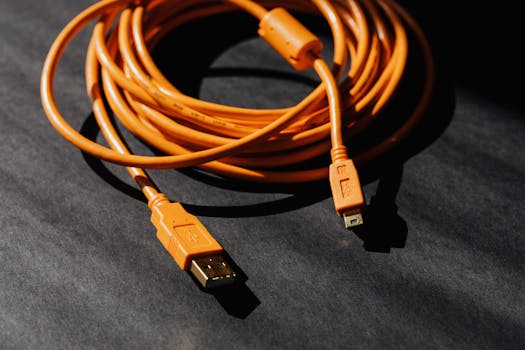
As technology continues to evolve at a rapid pace, one constant in the realm of digital connectivity is the Universal Serial Bus (USB). Since its inception in the mid-1990s, USB has become a fundamental tool for transferring data and connecting devices. From USB 1.1 to the latest USB4, each iteration has brought significant improvements that have helped shape the tech landscape. As we look to the future, it's exciting to consider what the next phases of USB innovation might bring.
The Evolution of USB Technology
To understand where USB technology might be headed, it's helpful to look back at its evolution. USB 1.1 made its debut with a maximum data transfer rate of 12 Mbps, which was revolutionary at the time. This development was followed by USB 2.0, which dramatically increased the speed to 480 Mbps. USB 3.0 and later 3.1 and 3.2 iterations further accelerated this pace, offering speeds up to 20 Gbps.
.png)
The introduction of USB4 in 2019 marked a significant leap forward. USB4 can handle data transfer speeds up to 40 Gbps, supports multiple simultaneous data and display protocols, and provides power delivery up to 100 watts. These features make USB4 not just a data transfer interface but a dynamic solution capable of driving a variety of high-performance devices.
What to Expect in Future USB Developments
Increased Data Transfer Speeds
As the demand for faster data transfer rates continues to grow, future versions of USB are expected to provide even greater speeds. Researchers and developers are likely to push the technology to its limits, potentially doubling or even tripling current speeds. This would be particularly beneficial for applications requiring high-resolution video transfers and data-intensive tasks like virtual reality (VR) and augmented reality (AR).
Enhanced Power Delivery
USB has also become a popular power delivery medium for devices such as smartphones, tablets, and laptops. Future iterations of USB might expand on this capability, possibly increasing the amount of power that can be delivered. This enhancement could lead to a reduction in the variety of power adapters needed, moving towards a more universal charging solution.
Improved Data Security
As USB devices are commonly used to transfer sensitive information, enhancing security features is a critical area of focus. Future USB standards may incorporate more advanced encryption methods and authentication protocols to ensure data integrity and security. This would make USB devices more reliable and secure for professional and personal use.
Greater Versatility and Compatibility
The trend towards USB-C has already shown the benefits of a more uniform, reversible connector that can be used across a wide range of devices. Future developments might introduce even more versatile connectors, or perhaps a move towards truly universal ports that can connect with any device without the need for adapters.
Wireless USB
One of the most anticipated innovations in USB technology is the potential development of a wireless USB standard. This would allow for the convenience of Bluetooth-like connectivity with the performance of traditional USB. If achieved, wireless USB could eliminate the clutter of cables and the complexity of physical connections.
The Impact on Consumers and Industries
The ongoing evolution of USB technology will have a profound impact on consumers and various industries. Faster data transfer speeds and enhanced power delivery can lead to more efficient work environments and even foster new types of technology that could revolutionize fields like healthcare, education, and entertainment.
For consumers, the simplicity of using a single type of connector for multiple devices not only enhances convenience but also reduces electronic waste. As USB technology continues to advance, it could play a pivotal role in promoting sustainability and reducing the environmental impact associated with electronic devices.
Conclusion
The future of USB innovation holds promising advancements that could transform both how we use technology and the technology itself. With potential developments in speed, power delivery, security, and wireless capabilities, USB is set to remain at the forefront of digital connectivity innovations. As we move forward, it will be fascinating to see how these innovations unfold and integrate into our daily lives, further shaping the landscape of digital technology.