Bluetooth technology has become the invisible backbone of our connected lives—powering everything from wireless earbuds to smart home devices, automotive systems, and even next-generation medical equipment. While convenience and ubiquity are the hallmarks of Bluetooth, an often overlooked aspect is its operational speed. As demands for real-time data transfer, seamless audio streaming, and instant device pairing grow, the focus is shifting toward amplifying Bluetooth connectivity for speedier operations. But what does it really take to make Bluetooth faster, more reliable, and better suited for tomorrow’s high-velocity digital environments? This article dives deep into the technologies, strategies, and innovations driving the next stage of Bluetooth performance—so you can understand what’s possible, what’s coming, and how it all impacts your daily tech experience.
The Evolution of Bluetooth: From Convenience to High-Speed Connectivity
Bluetooth was first introduced in 1999, designed to eliminate the tangle of wires among computers, peripherals, and mobile devices. The earliest versions—Bluetooth 1.0 and 1.1—offered a modest maximum data rate of 721 kbps, suitable for basic tasks like headset audio or file transfers between phones.
Fast forward to 2024, and Bluetooth has evolved through multiple iterations, each bringing enhancements in speed, range, and performance. Bluetooth 5.0, introduced in 2016, increased data rates to 2 Mbps and quadrupled the range of previous versions. Bluetooth 5.2 and above have introduced LE Audio, Isochronous Channels, and more, supporting applications from high-fidelity wireless audio to industrial automation.
.png)
Today, over 4.7 billion Bluetooth devices are shipped annually worldwide. The technology now supports high-throughput applications like HD streaming, rapid device synchronization, and Internet of Things (IoT) deployments. However, as these applications proliferate, so does the need for even faster, more robust Bluetooth connections.
Key Factors Limiting Bluetooth Speed and How to Overcome Them
Despite its progress, Bluetooth’s operational speed is still subject to several limitations:
1. $1 Bluetooth operates in the crowded 2.4 GHz ISM band, competing with Wi-Fi, microwaves, and other wireless devices. Interference can lead to packet loss and slowdowns. 2. $1 Even the latest Bluetooth versions have a theoretical maximum speed—Bluetooth 5.2, for example, tops out at 2 Mbps (Bluetooth Low Energy) or 3 Mbps (Bluetooth Classic). 3. $1 The antenna design, processor speed, and memory of a device can throttle Bluetooth performance. 4. $1 Physical obstructions, device placement, and proximity to other electronics can impact signal strength and speed.To amplify Bluetooth connectivity for speedier operations, both hardware and software solutions are being developed:
- $1 Bluetooth technology now uses AFH to avoid congested frequencies, automatically switching channels to reduce interference. - $1 Introduced in Bluetooth 5, mesh networking allows many-to-many device communication, improving data transfer rates and reliability in large-scale environments. - $1 Devices can switch between Bluetooth Classic and Bluetooth Low Energy (LE) depending on speed and power requirements. - $1 Chipmakers are developing multi-antenna and beamforming solutions to focus Bluetooth signals and improve throughput.Bluetooth Speed by the Numbers: Comparative Overview
Different Bluetooth versions offer varying speed and range capabilities. Below is a comparison of the most common versions used today:
| Bluetooth Version | Maximum Data Rate | Typical Range | Main Features |
|---|---|---|---|
| Bluetooth 4.2 | 1 Mbps (LE) | Up to 50m | Improved privacy, increased packet capacity |
| Bluetooth 5.0 | 2 Mbps (LE) | Up to 240m (outdoors) | Double speed, 4x range, increased broadcasting |
| Bluetooth 5.1 | 2 Mbps (LE) | Up to 240m (outdoors) | Angle of Arrival/Departure, improved location services |
| Bluetooth 5.2 | 2 Mbps (LE), 3 Mbps (Classic) | Up to 240m (outdoors) | LE Audio, Isochronous Channels, Multi-Stream Audio |
| Bluetooth 5.3 | 2 Mbps (LE), 3 Mbps (Classic) | Up to 240m (outdoors) | Enhanced power control, improved periodic advertising |
This table illustrates that while speed improvements have plateaued since Bluetooth 5.0, each new version brings critical enhancements for efficiency, audio quality, and network management—all of which contribute to a more responsive user experience.
Emerging Technologies Amplifying Bluetooth Performance
To meet the demands of high-speed, low-latency applications, several next-generation technologies are amplifying Bluetooth’s capabilities:
- $1 Unveiled with Bluetooth 5.2, LE Audio uses the new LC3 codec, which delivers higher audio quality at lower bitrates. This means more devices can stream or share audio simultaneously with less bandwidth. - $1 These channels, introduced in Bluetooth 5.2, enable synchronized audio streams—crucial for wireless earbuds, hearing aids, and group audio sharing. This reduces lag and improves the multi-device experience. - $1 Mesh networking allows hundreds of devices (like smart lights or sensors) to communicate with each other, increasing data throughput and reliability in smart homes and industrial settings. - $1 This technology dynamically adjusts hopping patterns in real time, further reducing interference and boosting speed in congested environments.For instance, the adoption of Bluetooth Mesh in large commercial buildings has reduced latency in lighting control systems from over 250 ms to less than 35 ms—a nearly 7x improvement, enabling real-time responsiveness.
Real-World Applications: Where Speedier Bluetooth Matters Most
The impact of amplified Bluetooth connectivity is evident across a spectrum of industries and everyday uses:
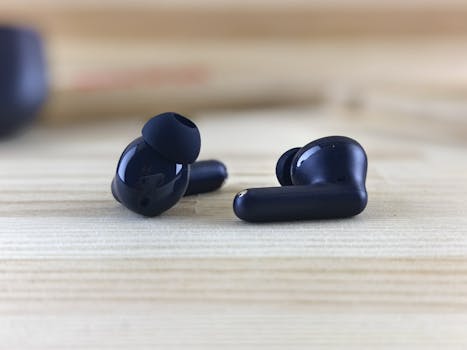
- $1 As of 2023, over 350 million true wireless earbuds were sold globally. Speedier Bluetooth ensures lag-free audio and instant pairing, especially with multi-device support from LE Audio. - $1 Real-time monitoring devices, such as glucose meters and heart rate monitors, rely on fast Bluetooth connections for immediate data transmission to smartphones or medical staff. - $1 In smart factories, Bluetooth Mesh enables thousands of sensors and machines to communicate instantly, reducing downtime and boosting productivity. - $1 Modern vehicles use Bluetooth for hands-free calling, streaming, and even car-to-car communication. Newer, faster versions ensure smoother, safer operations. - $1 Low-latency Bluetooth connectivity is essential for wireless controllers, VR headsets, and haptic feedback devices, where even a 50 ms delay can disrupt the immersive experience.How to Future-Proof Your Bluetooth Devices for Speed
With so many advances, it’s important to ensure your devices can take advantage of the latest Bluetooth capabilities. Here’s how to stay ahead:
1. $1 Always check device specs for Bluetooth version compatibility. Devices supporting Bluetooth 5.0 or higher will generally provide faster, more reliable connections. 2. $1 Manufacturers often release firmware updates that improve Bluetooth performance—especially for audio devices and wearables. 3. $1 Look for accessories certified by the Bluetooth SIG (Special Interest Group) to ensure optimal speed and interoperability. 4. $1 Keep Bluetooth devices within recommended range and away from physical obstructions or sources of interference (e.g., Wi-Fi routers, microwaves). 5. $1 Some premium devices now offer multi-antenna Bluetooth radios, providing better throughput and reduced dropouts.With these strategies, even existing devices can see significant speed improvements—while new hardware will be able to take full advantage of upcoming Bluetooth enhancements.
The Road Ahead: What’s Next for Bluetooth Speed?
As we look forward, the next evolution of Bluetooth will likely focus on three main areas: even lower latency, better management of dense device environments, and integration with future wireless standards such as Wi-Fi 7 and 5G.
The Bluetooth SIG announced in 2023 ongoing research into “Bluetooth Ultra Low Latency,” targeting sub-10 ms lag for applications like cloud gaming and AR/VR. Meanwhile, artificial intelligence is being explored to further optimize frequency hopping and device coordination in crowded spaces. Finally, as wireless ecosystems become more interconnected, seamless handoffs between Bluetooth, Wi-Fi, and cellular networks will be essential for truly ubiquitous, high-speed connectivity.
The bottom line: Amplifying Bluetooth connectivity for speedier operations isn’t just about making your headphones connect faster—it’s about enabling a future where wireless devices of all kinds communicate in real time, reliably, and without boundaries.