The Comprehensive Guide to WiFi Routers: How They Work, Key Features, and Choosing the Best Model
WiFi routers are the unsung heroes of the digital age. These compact devices connect dozens of gadgets to the internet, power smart homes, support remote work, and keep us entertained. But with technology advancing rapidly, WiFi routers have grown in complexity and capability. Whether you’re struggling with dead zones, considering an upgrade, or simply want to understand how these devices work, this comprehensive guide will help demystify WiFi routers, explain their evolution, and help you make an informed decision when purchasing your next model.
Understanding WiFi Router Basics: What Do They Actually Do?
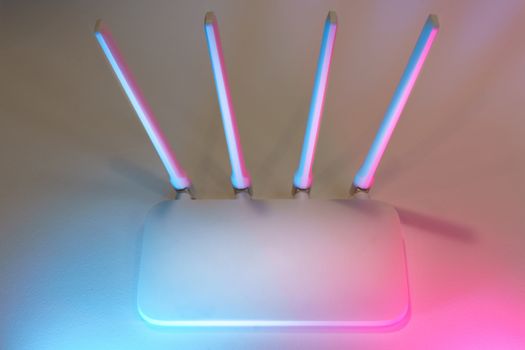
At its core, a WiFi router acts as the central hub of your wireless network. It takes the internet signal from your modem (usually provided by your internet service provider), converts it into radio signals, and broadcasts those signals throughout your home or office. Every connected device—laptops, smartphones, tablets, smart TVs, and even refrigerators—communicates with the router to access the internet.
.png)
WiFi routers operate on radio frequency bands, typically 2.4 GHz and 5 GHz. The 2.4 GHz band offers a longer range but is more susceptible to interference, while the 5 GHz band provides faster speeds over shorter distances. Modern routers can handle both bands simultaneously (dual-band), and some support three bands (tri-band) to reduce congestion, especially in busy households.
According to Statista, as of 2024, the average U.S. household has 22 connected devices, up from just 11 in 2019. As the number of devices grows, the demands on your WiFi router increase, making it essential to understand what your router is capable of and when it might be time for an upgrade.
The Evolution of WiFi Standards: From 802.11b to WiFi 6E
WiFi technology is governed by a family of standards developed by the IEEE (Institute of Electrical and Electronics Engineers). Each new WiFi generation brings faster speeds, lower latency, and improved efficiency. Here’s a quick look at the major milestones:
| Standard | Year Released | Maximum Speed | Main Benefits |
|---|---|---|---|
| 802.11b | 1999 | 11 Mbps | First mainstream WiFi, 2.4 GHz band |
| 802.11g | 2003 | 54 Mbps | Improved speed, backward compatible |
| 802.11n (WiFi 4) | 2009 | 600 Mbps | Dual-band support, MIMO technology |
| 802.11ac (WiFi 5) | 2014 | 1.3 Gbps+ | Faster speeds, 5 GHz focus |
| 802.11ax (WiFi 6) | 2019 | 9.6 Gbps | Higher efficiency, more devices |
| WiFi 6E | 2021 | 9.6 Gbps | Access to 6 GHz band, less congestion |
WiFi 6 and WiFi 6E are the latest standards, offering significant improvements in speed, capacity, and security. WiFi 6E, in particular, adds a new 6 GHz band, providing more bandwidth and less interference—a game-changer for crowded environments and high-demand applications.
Key Features to Consider When Buying a WiFi Router
Not all routers are created equal. The right router for a small apartment will differ dramatically from one needed for a large, multi-story home or a smart office. Here are the critical features to keep in mind:
1. $1: Routers are rated in Mbps or Gbps (megabits or gigabits per second). While advertised speeds are theoretical maximums, a higher speed rating generally indicates better performance. For example, a WiFi 6 router can handle multiple 4K streams and gaming sessions without lag. 2. $1: Dual-band routers offer both 2.4 GHz and 5 GHz channels, while tri-band routers add an additional 5 GHz or 6 GHz band. More bands mean better performance in crowded environments. 3. $1: Multi-User, Multiple Input, Multiple Output (MU-MIMO) and Orthogonal Frequency-Division Multiple Access (OFDMA) allow routers to communicate with multiple devices at once, rather than one at a time. This means less waiting and smoother experiences for homes with many users. 4. $1: Most routers advertise a coverage area in square feet. For example, a typical router might cover 1,500-2,500 sq. ft. Large homes may require mesh systems or range extenders. 5. $1: Look for WPA3 encryption, guest networks, and automatic firmware updates. According to the FBI, more than 50% of home WiFi networks are vulnerable to cyberattacks due to outdated firmware or weak passwords. 6. $1: Parental controls, Quality of Service (QoS) for prioritizing gaming or streaming, USB ports for file sharing, and built-in antivirus protection can also add value.Mesh WiFi Systems vs. Traditional Routers: Which Should You Choose?
If you’ve struggled with WiFi dead zones, mesh WiFi systems may be the answer. Unlike traditional single-unit routers, mesh systems use multiple devices (called nodes) to create a seamless wireless network that blankets your entire home in coverage.
Here’s a quick comparison:
| Feature | Traditional Router | Mesh WiFi System |
|---|---|---|
| Coverage | 1,500-2,500 sq. ft. (typical) | Up to 6,000+ sq. ft. with multiple nodes |
| Setup Complexity | Simple | Moderate, but often app-guided |
| Dead Zone Elimination | May require extenders | Excellent, seamless handoff between nodes |
| Cost | $$ | $$$ |
| Best For | Apartments, small houses | Large homes, multi-floor setups |
Mesh systems such as Google Nest WiFi, Netgear Orbi, and Eero have become popular, especially as the average home size in the U.S. is now over 2,400 square feet and users demand reliable coverage in every room.
Setting Up and Optimizing Your WiFi Router for Peak Performance
The placement and configuration of your router dramatically affect performance. Here’s how to get the most out of your device:
- $1: Put your router as close to the center of your home as possible, away from thick walls, metal, and other electronics. - $1: Place the unit on a shelf or high surface for better signal propagation. - $1: Regularly check for and install firmware updates to improve performance and security. - $1: Many routers can automatically select the least congested channel, but you can also do this manually using a WiFi analyzer app. - $1: Use a strong, unique password and enable WPA3 security if available. - $1: Use Quality of Service (QoS) settings to prioritize traffic for gaming, streaming, or video calls.According to a 2022 survey by Parks Associates, 35% of WiFi users experience connectivity issues that could be solved with better router placement or configuration.
Future-Proofing Your Network: WiFi 7 and Beyond
The next generation of WiFi, known as WiFi 7 (802.11be), is already on the horizon and expected to be commercially available by 2025. WiFi 7 promises speeds up to 46 Gbps, ultra-low latency, and improved performance for virtual and augmented reality applications. It will use advanced technologies such as Multi-Link Operation (MLO) and 320 MHz channel width, making it ideal for increasingly connected homes and offices.
While it’s not necessary to upgrade immediately, investing in a WiFi 6 or 6E router today ensures your network will be compatible with new devices and services for years to come.
Making the Right Choice: Final Thoughts on WiFi Routers
WiFi routers are more than just a gateway to the internet—they’re the backbone of our connected lives. As the number of smart devices and bandwidth-hungry applications continues to grow, having the right router can make the difference between frustration and seamless connectivity. By understanding the technology, knowing what features to look for, and choosing a model that matches your needs and space, you’ll enjoy faster speeds, better coverage, and greater security.
Whether you’re shopping for a basic model for a small apartment, a cutting-edge WiFi 6E router, or a mesh system for sprawling coverage, now you have the knowledge to make the right choice for your digital world.